Geofrey Maina · Computer Science, Egerton University · Class of 2030
To the uttermost.
“To the Uttermost” began as a school motto and became a standard for how I approach learning and engineering. This is the story of my academic development, my transition into Computer Science, the projects that have shaped my technical thinking, and the ambitions guiding the work ahead.

Chapter one · Early academic foundations
The beginning of a problem-solving mindset
My academic journey began in Homa Bay County, where curiosity gradually became one of the strongest influences on how I learn. I was interested in understanding how things worked, not simply using them. That distinction would later become central to my interest in computing: I wanted to move beyond interacting with technology and understand the systems, logic and decisions behind it.
My early education gave me the foundation to ask questions, work through unfamiliar material and build knowledge progressively. I came to appreciate that meaningful learning is not just about arriving at an answer; it is about understanding the reasoning that makes the answer valid.
That mindset has stayed with me. When I encounter a difficult concept, I try to break it into smaller questions, identify what I understand, and work carefully through the gaps. It is the same approach I now use when studying algorithms, mathematics and programming.
Over time, I became increasingly interested in the relationship between analytical thinking and practical problem-solving. I began to see education not only as preparation for examinations, but as a way to develop the judgement and technical ability needed to address real problems.
This foundation continues to influence the standards I set for myself: be curious, understand the principles, practise consistently and do not mistake memorising a procedure for mastering an idea.

Chapter two · Adek Primary and Homa Bay National School, 2021–2025
Building an academic foundation
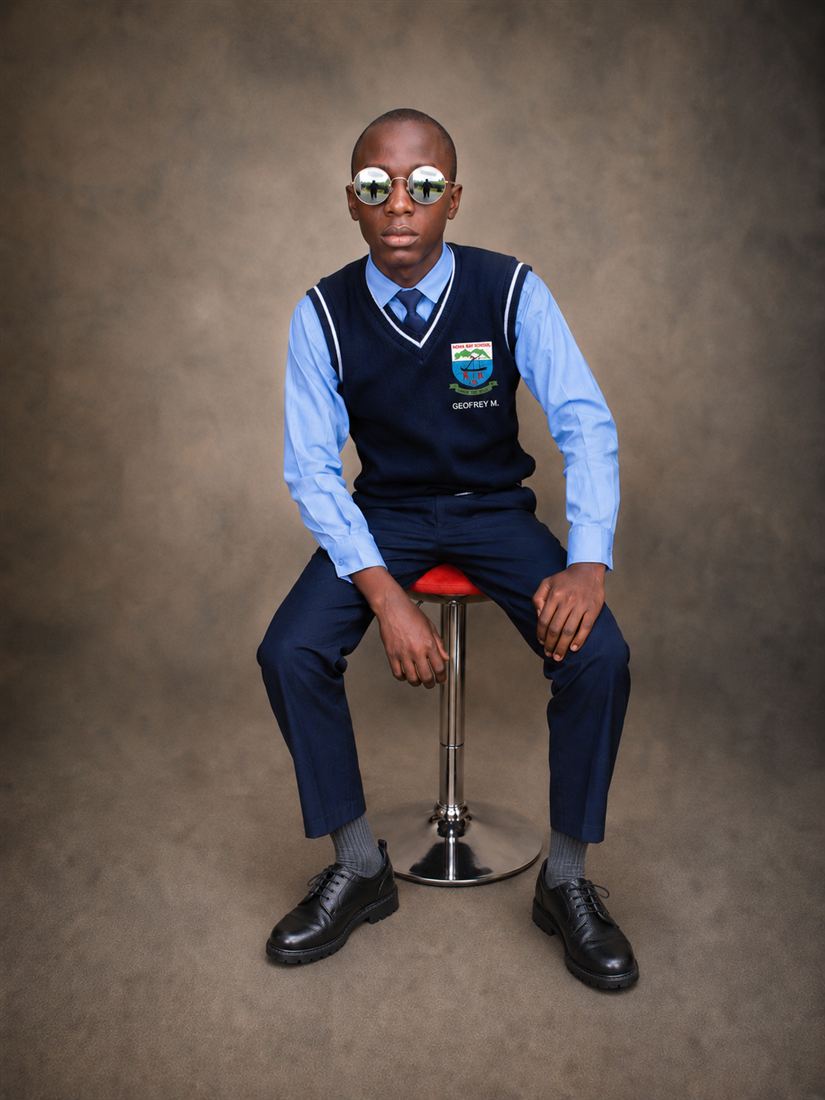
My formal academic journey includes Adek Primary School, where I completed KCPE in 2021, and Homa Bay National School, where I studied from 2022 to 2025. Those years strengthened my discipline, confidence and ability to work towards demanding academic goals. The school motto, “To the Uttermost”, gradually became more than an inscription: it represented the standard of effort I wanted to bring to every responsibility.
I took a keen interest in Computer Studies and Biology, served as a class representative and participated in student leadership. These responsibilities helped me develop organisation, communication and accountability alongside my academic work.
Computer Studies was especially influential. Learning Microsoft Word, Excel, Access and Publisher introduced me to practical digital tools and encouraged me to think about how information is structured, processed and presented. Working with spreadsheets and databases gave me an early appreciation for accuracy, logical organisation and the consequences of small errors.
My teachers also played an important role in shaping my academic confidence. Their expectations challenged me to take my abilities seriously and to approach difficult work with greater consistency. I learned that constructive feedback and high standards can be powerful drivers of growth.
Preparing for joint examinations demanded planning, sustained concentration and the ability to manage several subjects at once. I learned to keep working even when a topic required more time than expected, a habit that remains valuable in university-level study.
“Maina, you are the Esther of the Bible.”Mr. John Maji, my Computer Studies teacher. His confidence challenged me to uphold a high standard in the subject.
I completed KCSE in 2025 with a mean grade of B+ and earned an A in Computer Studies. That result confirmed the direction I wanted to pursue: a deeper, more rigorous study of computing.
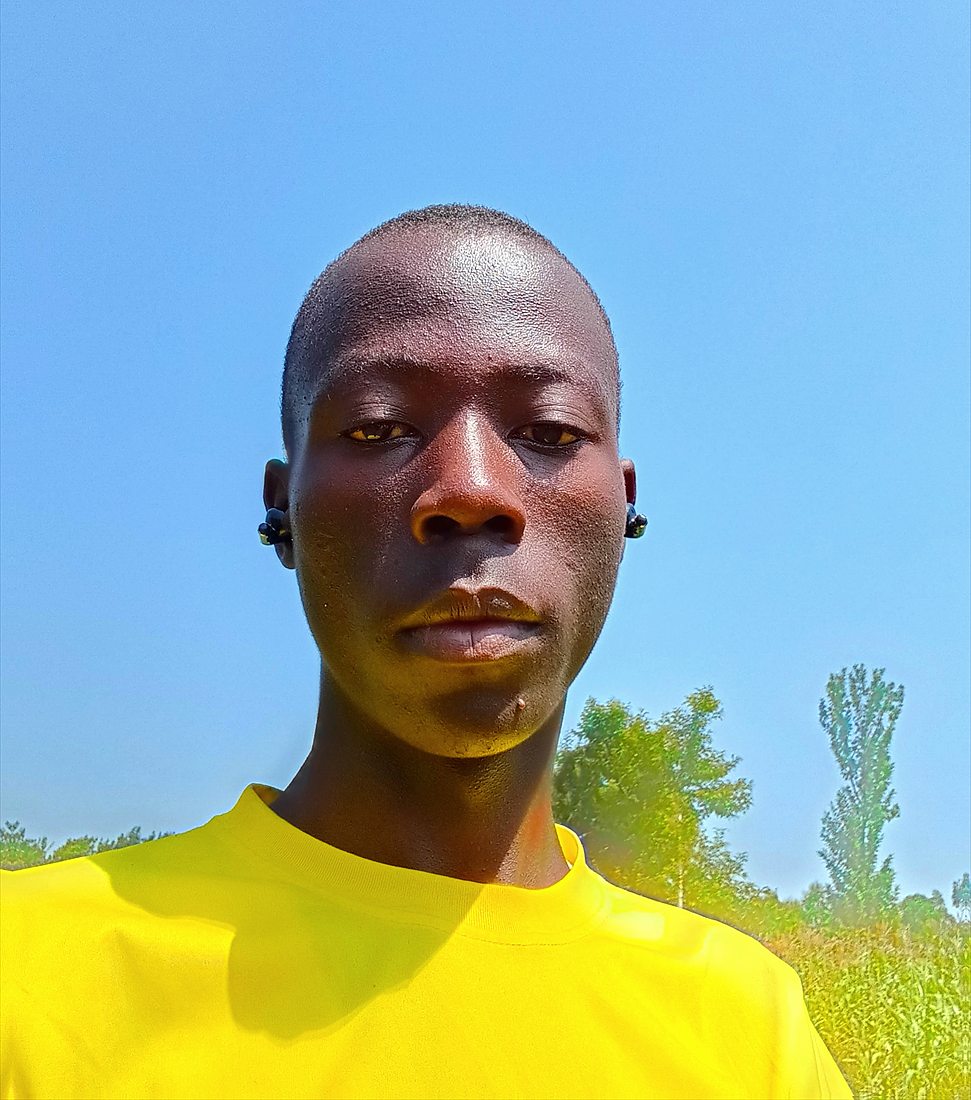
Chapter three · Independent study, 2025–2026
Learning to build, one concept at a time
After completing KCSE, I used the period before university to explore programming independently. I began with Python, then experimented with HTML and C++. What started as curiosity became a deliberate learning process: study a concept, implement it, test it, identify what I misunderstood and try again.
My first calculator program did not work as expected. The experience exposed a gap between recognising syntax and understanding program logic. I had to return to fundamentals: variables, data types, conditions, loops and the flow of execution. That experience changed how I approach programming. I now value understanding over copying solutions or rushing towards a finished interface.
Debugging became an essential part of that process. An error is useful evidence: it narrows the distance between what I intended the program to do and what it actually does. Learning to interpret errors, isolate causes and test corrections has made me more systematic as a developer.
I continue to use focused exercises and small implementations to consolidate concepts, while gradually taking on more substantial projects. My Learning Lab records this progression, from foundational programming exercises to object-oriented examples and practical simulations.
Learn the principle. Implement it. Test it. Understand why it works.
This independent learning period established a process I intend to keep throughout my career: build strong fundamentals, document what I learn and apply knowledge to increasingly complex problems.
Interlude
A consistent standard
Across different stages of my education, the visual details change, but the standard I associate with “To the Uttermost” remains consistent: preparation, discipline, attention to detail and a commitment to improving the quality of my work.
Chapter four · Collaboration and professional values
The discipline behind meaningful work
Technical ability matters, but effective engineering also depends on how people think, communicate and work together. Group responsibilities, student leadership and collaborative activities have helped me appreciate the importance of reliability, preparation and respect for different perspectives.
Working with other people has taught me to communicate clearly, listen before reaching conclusions and take responsibility for the part of a task entrusted to me. These are not secondary skills in technology. Complex systems are rarely built by one person working in isolation; they require coordination, shared understanding and careful decisions.
“We must prove them wrong.”A reminder that ambition should be demonstrated through consistent work.
I value environments where people challenge one another to improve, exchange ideas and remain accountable for results. Collaboration is most productive when every person contributes meaningfully and the team can evaluate progress honestly.
Leadership has reinforced a related lesson: responsibility is demonstrated through preparation and follow-through. Whether coordinating an activity or contributing to a technical project, I aim to be dependable, organised and willing to learn.
My approach to difficult engineering work reflects the same values. I investigate before guessing, make changes carefully, test assumptions and seek another perspective when I reach a dead end. I am interested in using AI tools as aids to reasoning, not substitutes for understanding.
These habits are part of the professional foundation I am building alongside my Computer Science education: technical curiosity, clear communication, disciplined execution and a willingness to keep improving.
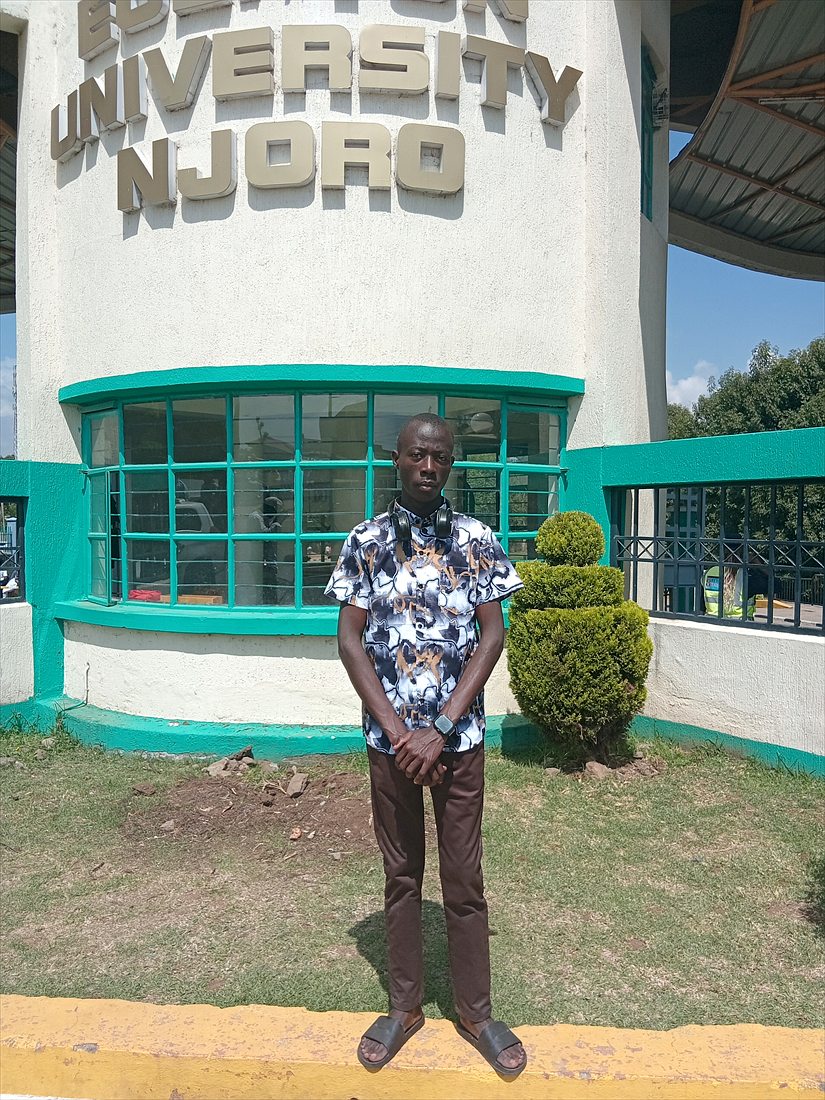
Chapter five · Year one, class of 2030
Computer Science at Egerton University
I am currently pursuing a Bachelor of Science in Computer Science at Egerton University, Njoro. University has given me a more rigorous setting in which to develop the mathematical, computational and analytical foundations of software engineering. My focus is to understand the principles behind the tools I use and to connect classroom learning with practical engineering work.
My academic work spans programming, computer architecture, information technology and mathematics. I approach each unit as part of a larger foundation: programming develops structured problem-solving, mathematics strengthens abstraction and analytical reasoning, while computer architecture explains the systems on which software runs.
One substantial project in my portfolio is the GPA Tracker, a desktop application designed around Egerton University grading rules. Building it required more than displaying results. I had to model academic records, calculate weighted marks accurately, handle decimal precision and organise the code into maintainable components. The project has developed through iterative debugging and automated testing, with 21 modules and 564 automated checks in the version documented here.
My portfolio website is another important project. It is built to present my work, document my development and provide a clear professional point of reference. I treat it as a software product rather than a static page: structure, accessibility, responsive behaviour, content accuracy and testing all matter.
My next major direction is EduMind AI, a proposed learning-support system that would analyse a student's academic performance and provide explainable revision recommendations. I am approaching it as an engineering and research problem: define the user need, assess the available data, establish a defensible baseline, evaluate recommendations and validate the system with students before making claims about its usefulness.
My long-term ambition is to become an AI/ML Engineer, building intelligent systems that solve meaningful problems. I am particularly interested in machine learning and deep learning, while recognising that strong foundations in mathematics, algorithms, software engineering and data are essential. I aspire to contribute to high-impact engineering teams at organisations such as Google, Microsoft or other technology companies, but my immediate priority is to become a capable engineer through disciplined study and substantial projects.
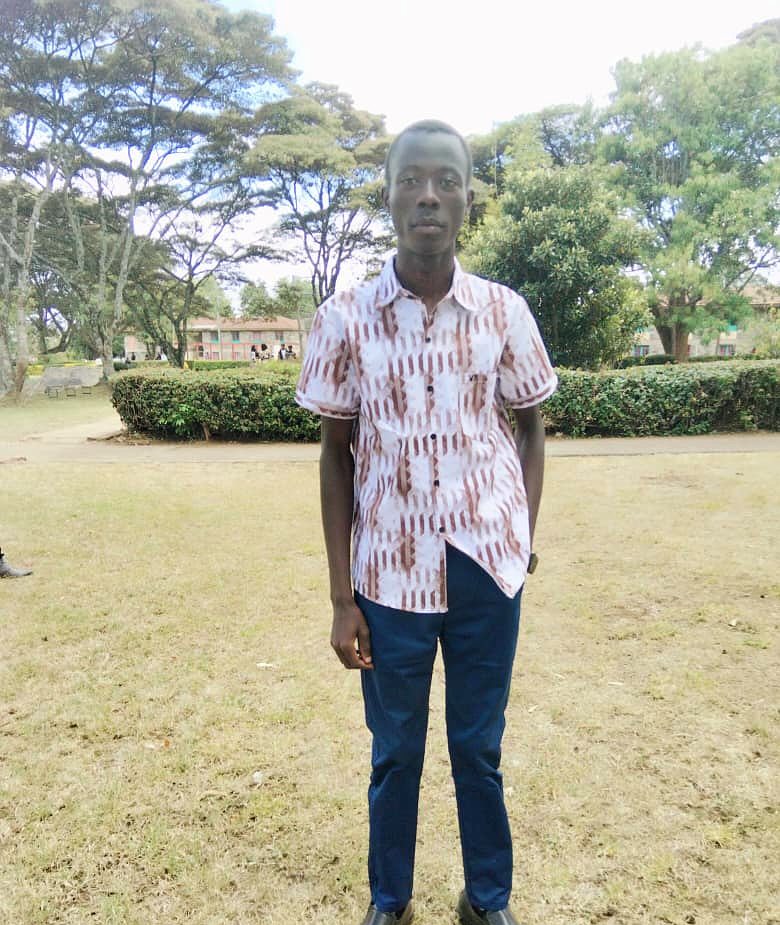
The principles that guide my work: To the Uttermost. Learn the principle. Implement it. Test it. Understand why it works. Better Your Best.
Then & now
Student to aspiring engineer
Keep reading
The story continues in the work.
My work is an ongoing record of how I turn academic foundations into practical systems, learn from difficult problems and develop as an engineer.